

Photo Credit: Monica I. Johnson
Sometimes you don’t know until you know, and I didn’t know. I found out about the döner kebab when ordering from a restaurant called Pizza & Curry & Döner Kebab in Cockeysville, Maryland. I have to admit, since the pizza and curry is in huge letters, I never realized there was additional text underneath, and it turns out that the döner meat is a major part of the restaurant’s menu.
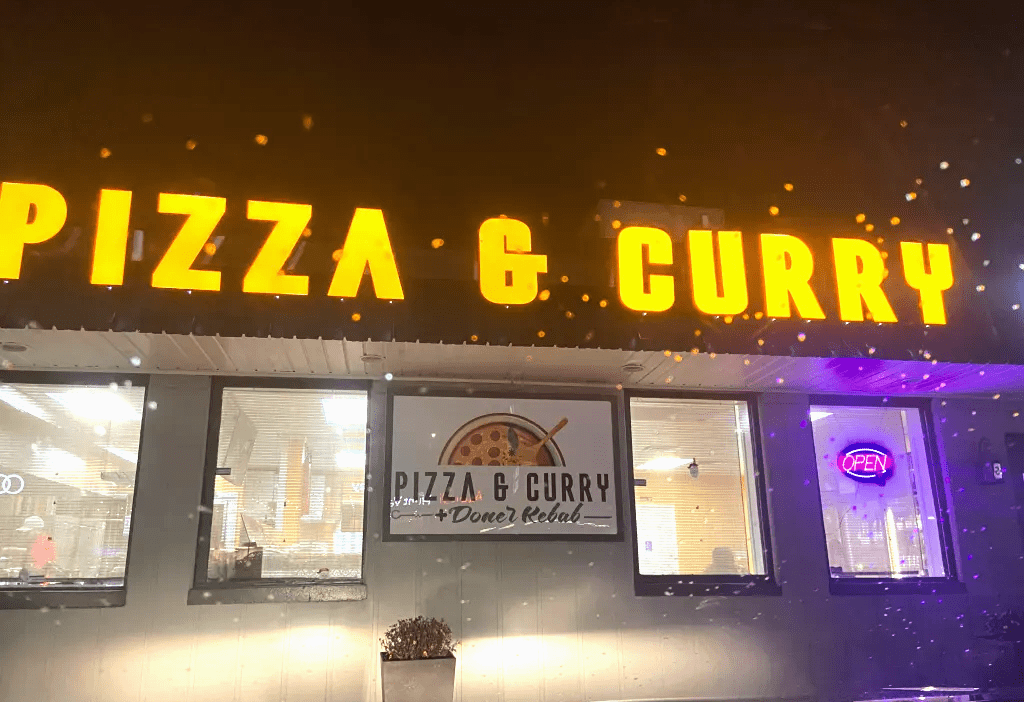
Photo Credit: Monica I. Johnson
I was in the mood for something different, so when I looked on the restaurant’s online menu, which boasted a plethora of fusion Indian dishes and curry pizzas, I saw doner meat sprinkled throughout the menu on pizzas, salads, and the kebab.
Döner Meat
Döner meat is generally lamb, but other meats like beef, chicken, veal, and turkey are also used. The preparation of the meat comes from Turkey, way back in Ottoman Empire days. It was cooked in a spitfire roast—seasoned with spices like garlic, cumin, coriander, paprika, and oregano—gradually turning as the meat’s juices dripped straight into the fire.
Later, the meat orientation was changed. Now, the common way to roast the meat is in vertical rotisserie orientation. The positioning allows the juices to slither down the side of the meat, further seasoning it.
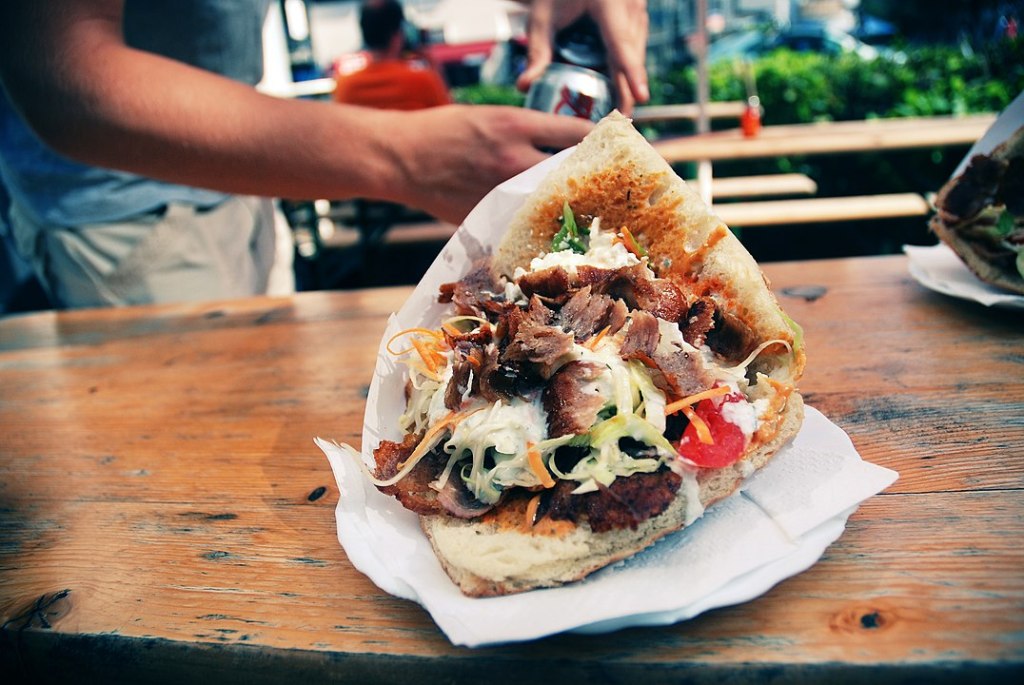


Photo Credi: Wikipedia
Next the döner meat is cut right from the rotisserie stake, piled high and served in a freshly baked cone shape pita flat bread. The kebabs are often served with chopped lettuce, tomatoes, and onions. The dish was popularized as a street food in 1970’s Germany as an influx of Turkish immigrants made their homes there.
Doner Kebabs are also popular in many other German-speaking countries, they are served in Vietnam, Tokyo, the U.K. and foodie destinations all around the world. Learn more about döner kebabs in this article by Food Republic.
Fun Fact
Just in case you’re wondering, “Which came first, the döner kebab or shawarma? The döner kebab was indeed the pioneer. Shawarma came later.

 Multi Cultural Cooking Network