

What if you happened to be visiting a restaurant that served something that you didn’t find on most menus. It would be worth checking out, right? So that’s what I did when I saw gulab jamun on the Curry & Pie menu.
Gulab jamun is a sweet treat that, in appearance, is reminiscent of cake balls, but not quite as dense. In my opinion, the texture was more like a bite-sized pancake ball soaked in a sweet honey syrup.
Gulab jamun, a beloved dessert, has delighted taste buds across the world, weaving its way through various cultures with its sweet and luscious allure. Originating from the Indian subcontinent, gulab jamun has a rich history rooted in the culinary traditions of South Asia. This delectable dessert is made from milk solids, sugar, and cardamom, shaped into soft, golden-brown spheres, and soaked in rose-flavored sugar syrup.
The Indian Subcontinent: A Birthplace of Tradition
In India, gulab jamun is a staple dessert served during festivals, weddings, and celebrations. Its name is derived from Persian words: “gulab,” meaning “rose water,” and “jamun,” referring to a type of Indian berry similar in size and shape. Each region in India has its own variation, with some adding saffron or coconut to the syrup, enhancing its flavor and fragrance.
Pakistan and Bangladesh: A Shared Heritage
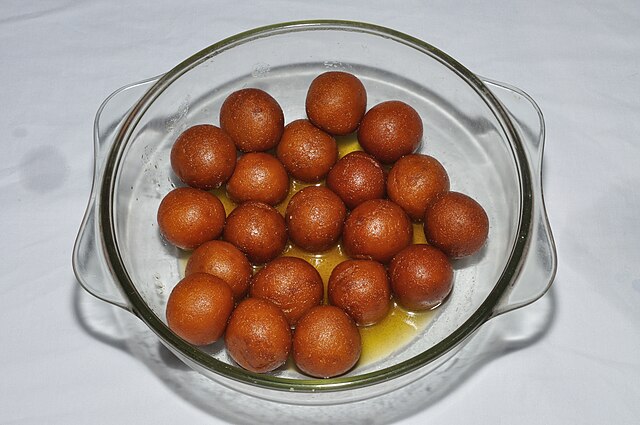
In Pakistan and Bangladesh, gulab jamun is equally cherished, often served during Eid festivities and other special occasions. The preparation remains largely similar across the region, with slight variations in ingredients and techniques. In Bangladesh, for instance, the dessert might be served with a drizzle of condensed milk, adding a richer taste.
Nepal and Sri Lanka: Unique Twists
Nepal and Sri Lanka have embraced gulab jamun with unique adaptations. In Nepal, the dessert is sometimes made with khoya, a type of milk solid, and served with a hint of nutmeg. In Sri Lanka, locals infuse the syrup with local spices like cinnamon, giving it a distinct island flair.
Global Appeal: A Sweet Ambassador
Beyond the Indian subcontinent, gulab jamun has made its way to Middle Eastern and Western kitchens. Its versatility allows it to be paired with diverse flavors, gaining popularity in countries like the United States, Canada, and the United Kingdom. The dessert’s ability to blend seamlessly into different culinary landscapes speaks to its universal appeal.
Gulab jamun, with its rich history and cultural significance, continues to be a symbol of sweetness offering a taste of tradition with every bite.

 Multi Cultural Cooking Network
One response to “Gulab Jamun: It’s What’s for Dessert!”
@AdventuresfromElle.thanks for the “Like” and the comment. (Btw, I deleted your comment by accident) But as you said, it does sound good, and I can attest it is pretty good. The honey syrup makes the dessert to me.
LikeLike